Reflections from ITAC8: The Importance of Creativity in Education – Siobhán Cooper
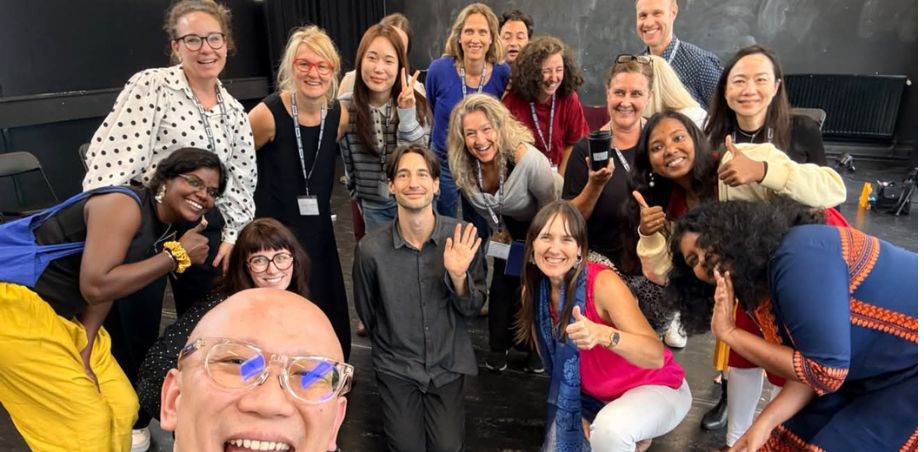
Reflections from ITAC8: The importance of creativity in education.
Two weeks into a new role at the Arts in Education Portal, I was lucky enough to attend the ITAC8 conference in Antwerp, a gathering of teaching artists, educators, performers, cultural leaders, researchers and change-makers from more than 35 countries. As someone new to the education sector, it was perfect timing; I couldn’t have asked for a better introduction to teaching artistry.
The event began with Crosspoint, a percussion project bringing together children and teenagers from around the world, who led us into the main hall in a lively performance using self-made instruments crafted from recycled materials. It was a fantastic start to the event, with the energy radiating from the young performers working as a reminder of why we were there. This was followed by a passionate keynote from Eric Booth, a founding leader of the global field of teaching artistry. The combination set the tone for the weekend as one of collaboration, creative learning and positivity, with a focus on using the arts for the benefit of wider society.
All the workshops I attended highlighted how the impact of arts in education extends far beyond simply creating art, and while all were strong in their own right, I have chosen to write about three in particular. I chose these three because, as a visual artist, these performance-focused workshops were totally outside my comfort zone and, as a result, were the ones I learnt the most from.
Without Words: A mime-inspired workshop led by Becky Baumwoll and Tasha Milkman of Brocken Box Mime in New York, focusing on how we can and do communicate with children ‘without words’. In this workshop, we didn’t speak for the first 45 minutes, yet through the use of body language, visual breadcrumbs and using the empty space, we found ourselves being directed to work together to create human sculptures.
Drama for Well-Being and Social-Emotional Learning: In a workshop led by William Yip, we introduced ourselves using paper, turning what could have been a fairly standard introduction into something creative and engaging. The workshop focused on using play as a form of learning and how to use drama to help young people and children express their emotions, a central theme of William’s paper Flourishing in Rural Classrooms: Empowering “Left-Behind” Children and Teachers in China through Drama Education.
Climate-Voices and Visibility + Just Breathe, Okâwîmâwaskiy – A cross-cultural reconciliation project: My final workshop of the event was a dance and storytelling workshop led by Katradi, an India-based organisation that focuses on bringing communities together and using dance workshops for empathy-based social transformation. The initial part of the workshop was led by Sangeeta Isvaran, a dancer, researcher and social worker. This involved multiple mini acting games, including pretending to be animals with complete strangers in order to break down any awkwardness in a room. The workshop ended with us working with Sangeeta’s colleague, Melanie Kloetzel, who joined remotely from India and talked us through a meditation on how climate change feels for her as a paraplegic who can’t regulate her own body temperature. A powerful experience that worked because of the steps we had gone through earlier in the session.
Final Takeaways from the ITAC8 Conference in Antwerp
These workshops highlighted how a welcoming facilitator and a thoughtfully designed workshop can break down unnecessary hierarchies while creating space for connection, collaboration and confidence – all central to the development of young people today. I never expected to feel comfortable acting or dancing, let alone pretending to be an animal in a dance workshop with a room full of complete strangers. Yet, I felt totally confident and comfortable, a testament to the power of a good workshop.
My biggest takeaway from ITAC8 was a renewed understanding of how important arts and creativity are in education. Not only for developing the arts in Ireland, but for the wider impact arts education can have on communities and young people. I saw so many creative teaching practices that could be integrated across all areas of education; bringing engagement, curiosity and fun into the classroom. When done well, they can also challenge social hierarchies, create a sense of belonging and have a huge impact on young people’s confidence.
Something else that will stay with me is how fun it was. There was a real sense of joy in learning, participating and being willing to look a little silly. If creativity can make adults more willing to engage, more comfortable with one another and more curious about learning, then it shows just how important it can be in how we educate young people. As William Yip said at the beginning of his workshop, “Play is the brain’s favourite way of learning.”
Foilsithe
18/9/2026
Foirmeacha Ealaíne
Leibhéal
Na Luathbhlianta, Bunscoil agus Iar-bhunscoil