Reflections from ITAC8: Bringing Global Teaching Artistry Back to Ireland – Phil Kingston
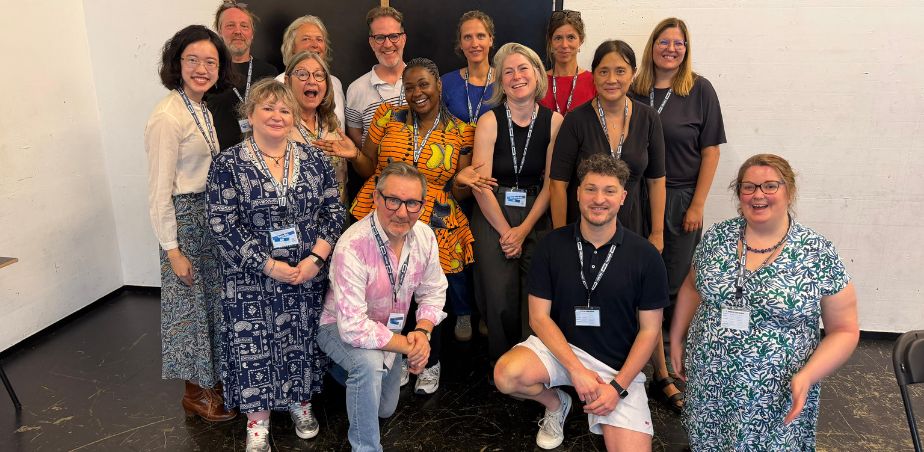
Image: "Echoes of Place: Voices and Visions of Where We Come From" Session with Annase Raji from The University of Texas
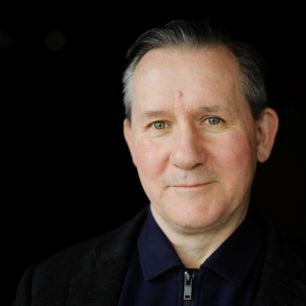
Phil Kingston is the Community and Education Manager at the Abbey Theatre, where he leads the development and delivery of participation, applied-drama and education programmes for schools, communities and young people. His work includes producing plays and workshops for primary and secondary schools as well as long term projects with community groups like BeLonG To, the SAOL Project and IPAS Centres.
He also works with the RCPI training doctors, and with St James's supporting carers. He serves on the Advisory Panel for the Arts in Education Portal, the editorial committee of Youth Theatre Ireland and the Learning and Engagement group of the CNCI. Before moving into arts education, Phil worked as an actor, playwright, television scriptwriter and dramaturge.
Reflections from ITAC8: Bringing Global Teaching Artistry Back to Ireland
Walking in on Friday morning there was a multi-cultural buzz in the foyer of De Singel, the expansive arts centre in southern Antwerp where ITAC 8 was being held. Which isn’t a surprise as the majority of delegates were Teaching Artists of various sorts. You know, the type that has you standing up and doing stuff with sometimes grating enthusiasm. No hiding at the back here.
True to form we began with an energetic performance by a huge gang of young people using percussion made entirely from recycled materials (the resonant wheelie bins were particularly cool). Around two hundred of them from across the globe had spent three days rehearsing, and they led us into one of the auditoria with ten minutes of joyful, energetic noise. Joining in as the giddy tail of this arts participation reptile set the playful, participatory tone for three days to come.
Admittedly, I arrived skeptical of the term “Teaching-Artist” and of ITAC itself. However, once ITAC’s warm and efficient director, Madeleine McGirk, introduced the organisation’s work and then was followed by a keynote from “pushy New Yorker” Eric Booth, I was completely sold. ITAC offers a wealth of resources for anyone using the arts for social change. Eric’s clarity of engagement as a speaker and lucidity in explaining its values and tools was inspiring. True to the spirit of the conference, we had even invented a customised greeting for our neighbours within five minutes of his keynote starting (shout out to South Korea’s Ellie, Shin and Hin).
This kind of hands-on participation underpinned all six workshops I attended, with only one being more talk than doing (though we did stage an impromptu tea party in that one). We invented stories, dances, and poems, drew pictures, sang, and spent ten minutes exploring doing everything possible with a humble till roll. That exercise was part of a presentation on working with neurodivergent participants by Margot Wood (Storywood Inclusive Arts, South Africa). Margot encouraged us to embrace non-verbal play, push past our comfort zones, and pay close attention to our rhythms — key elements she uses when auditioning performers to work with neurodivergent and PMLD groups. Crucially, she highlighted that audiences may have a slower rate of play, requiring facilitators to adapt their pace so as not to unthinkingly impose their own.
The three days were filled with such insights. I reflected on how the urge to awaken artistry in others has been a subterranean thread throughout my own career—first as an actor and writer, and later as a facilitator and arts manager with the Abbey Theatre. Many discussions were about the practical mechanics of different mediums as well as identifying which communities might benefit most. I sensed a creative tension between the pragmatism of seasoned practitioners – who have done the hard work explaining themselves to funding bodies and dubious government departments – and younger practitioners striving for activist, uncompromising approaches against late-capitalist, patriarchal values.
Here, some of my initial skepticism resurfaced regarding whether the emphasis on “Teaching-Artist” leans too heavily toward “Artist” and the maverick prestige that carries. One colleague noted he didn’t feel he had found his tribe because far fewer introduced themselves as teachers than artists. Another expressed wariness, viewing the title as a grasping after special status. I wonder if Ireland’s healthy suspicion of notions explains why the term hasn’t fully taken root here.
But as Eric Booth acknowledged at the outset, terminology matters less than the underlying practice. Whether called facilitation, applied drama, or community arts, the core practice remains one I hugely admire and believe underpins much of the work on the Arts in Education Portal. Its versatility across sectors was clear:
- Bob Selderslaghs (Head of Programs in Dance, Drama and Music, Uni of Antwerp) shared a moving account of using Dorothy Heathcote’s Mantle of the Expert framework in an Antwerp nursing home to empower older residents beyond the role of care recipients.
- Christiana Deliewen Afrikaner (Africa Arts Association) explored storytelling and visual arts to reconcile differences within her church community in Namibia.
- Professor Sarah Rohaert demonstrated how architecture students could design compelling distance-learning courses using narrative techniques.
- Annase Raji (Uni of Texas) facilitated sessions where young people in Nigeria created poetry singing of where they came from and where they hope to go.
The event was unapologetically progressive in its politics and practical in its commitment to drive change. Having reviewed hundreds of proposals for the Arts in Education Portal to document work or host events at Portal Days, I can confidently say Ireland’s own practice matches this international standard with equal imaginative swagger. Above all, the conference reaffirmed that Ireland is a vital player in this global movement, and deepening our connections with it will greatly enrich everyone’s practice and enrich more lives.
Read Portal Project Manager, Siobhán Cooper’s ITAC8 reflections here