Reflections from ITAC8: 80% (Roughly) of What We Teach Is Who We Are! – Naoise Ó Cuinneagáin
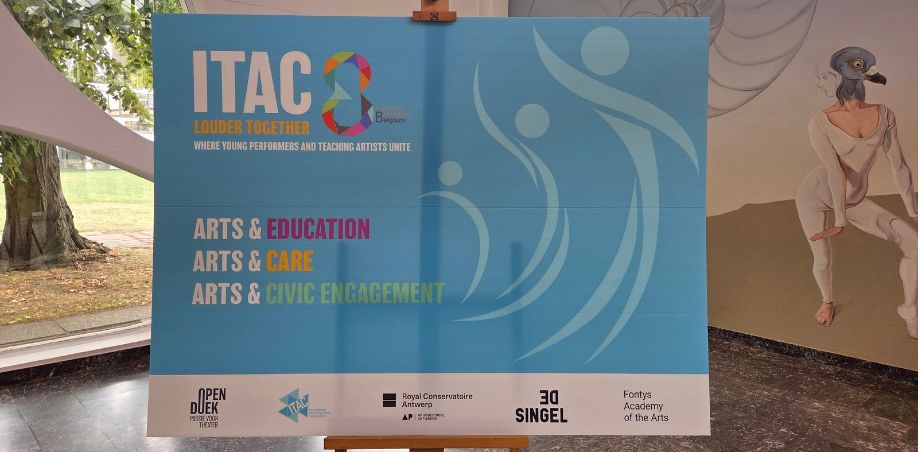
ITAC8
“80% (Roughly) of What We Teach Is Who We Are!”
It’s a curious thing what one takes away from events like ITAC8, held in Antwerp, a city famous for its diamond trade. As an Advisor with National Arts in Education, I arrived in pursuit of my own gems: insights, inspiration, and perhaps a connection to the wider world of arts education practice.
Among my notes was a line I can no longer attribute to any particular speaker: “80% of what we teach is who we.” Whether the percentage matters is beside the point. The sentiment certainly does. It was one of those ideas that lodged itself firmly in my thinking and seemed to echo through many of the sessions, conversations, and reflections that followed.
When I facilitate with teachers, I often encourage them to focus on a small number of takeaways. Perhaps one is enough if it is an idea that lingers, prompts reflection, or finds its way into our practice in some small way.
As I review my notes from the event, I find myself returning to a handful of ideas that continue to sparkle long after the conference has ended. These are the gems I brought home with me.
Gem One: Arts and Creativity Are for All
Arts and creativity are for all, yet it was striking to find myself at an international conference still advocating for what feels like such a simple idea. It seems obvious, does it not? Yet all too often it remains a work in progress. The challenge of ensuring that arts and creativity are visible, valued, and embedded in everyday life continues to be one shared by educators, artists, communities, and policymakers alike.
At times, creativity and the arts become like the pristine ‘Good Room’ in your grandmother’s house: always there but only opened when visitors arrive or when you want to make an impression.
Thankfully, the doors were very much open at de Singel, Antwerp’s international arts campus and the fitting home of ITAC8.
As participants flooded into the venue, there was a palpable sense that we were among people who spoke the same language. Fittingly, the host, Annabelle Van Nieuwenhuyse invited us to greet the auditorium in our own languages. I was proud to offer a simple Dia Duit and equally proud to hear hundreds of voices respond in kind. It was a small moment, but it carried a powerful message. In a conference that would unfold primarily through English, it was heartening to hear so many different languages acknowledged from the outset. As an Irish speaker, it was also a moment of pride. Tá an Ghaeilge beo, and it was heartening to share it with an international audience as a living language that continues to be part of our daily lives and cultural identity.
The voice of that common language arrived with a brazen New York accent. Eric Booth immediately captured the room. His mannerisms, energy, and presence reminded me of being a young schoolboy watching a magician perform. He inspired and delighted in equal measure, but most importantly, he called people to action.
His message was practical. Organisations can advocate, researchers can provide evidence, and leaders can shape policy, but meaningful progress depends on people acting. His challenge to the room was simple: join us, contribute, and ask yourself what you can add to the pot.
As I reflected on this afterwards, I kept returning to the image of the ‘Good Room’. If arts and creativity are truly for all, then perhaps it’s time we let the kids into the Good Room and turn it into the playroom instead.
Gem Two: Engagement Before Information
As a facilitator, I am always looking for what wins over a room, what changes the atmosphere, what truly lands, and what makes people listen.
Moving through the workshops, I encountered a wealth of stimulating ideas and thought-provoking content. Yet I was reminded that even the strongest content can lose its impact if the manner of delivery does not embody the message itself. People drift. The pace becomes too fast. Slides replace connection.
Thankfully, the strongest workshops understood something different.
Rather than beginning with information, they began with engagement.
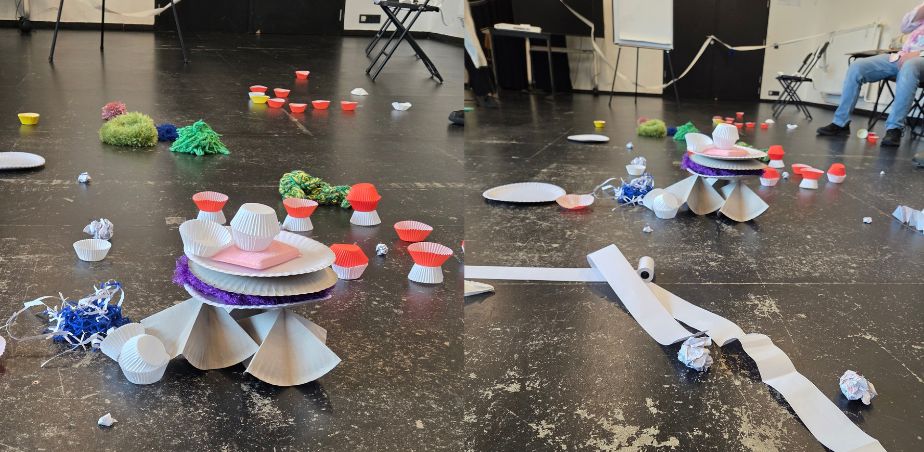
One session opened with a chant in a language nobody knew, including the presenter. Another invited participants to play with a simple roll of paper. In another, a balloon was passed around a group with the shared challenge of keeping it from touching the floor. These activities were simple, but they transformed the atmosphere. Suddenly, people were smiling, laughing, collaborating, and fully present.
Watching this unfold, I found myself reflecting on my own practice.
Whether working with children, teachers, or school leaders, I often ask myself the same questions. Are people engaged? Are they curious? Are they laughing, reacting, participating? If they are, then the hard work is already done. Once people feel connected, they are willing to take risks, share ideas, and journey somewhere new.
By the end of the conference, I found myself returning to the idea of engagement before information. The strongest workshops seemed to understand that, once people are engaged, they are far more open to whatever comes next.
Gem Three: If the Shoe Fits, Wear It. If It Doesn’t, Use It for Something Else
“Write down all the different ways you could use a shoe,” the facilitator began.
Pens, paper, imagination, and off we went. A flurry of brainstorming followed: pencils scribbling, ideas emerging, and people giggling as possibilities appeared on the page.
“One minute is up. Stop. What have you got?”
“A house for a mouse,” said one participant.
“Throw it,” suggested another.
“A pencil holder.
“Put it in a friend’s freezer.”
“Use it to open a bottle of wine.”
As the responses were shared, the facilitator drew our attention first to the ideas that appeared on multiple lists and then to those that nobody else had considered. There was a great sense of fun in the exercise, but there was also genuine curiosity. People wanted to know what others had come up with. We were eager to discover what was unique, surprising, or entirely unexpected.
What struck me most was not the activity itself but the people taking part.
This was a room full of adults. Serious operators. Experienced practitioners, researchers, leaders, and people whose LinkedIn profiles likely occupy acres of digital space. Yet there we were, united by the possibilities of a shoe.
The exercise reminded me that creativity is not something we leave behind in childhood. The urge to imagine, explore possibilities, and ask “What if?” remains deeply embedded within us.
Give people permission and space to play and they will often surprise themselves.
Possibility, fun, and laughter have a remarkable way of bringing people together. They create hope. They break down barriers. They remind us that, before our job titles and qualifications, we are human beings with an innate curiosity about the world around us.
My takeaway was simple: the instinct to ask “What else could this be?” sits at the heart of creativity.
Conclusion
As I reflect on the event, I come away feeling both confident and proud.
Proud of the work we are doing in National Arts in Education. Proud of the direction of curriculum reform, where creativity is no longer sitting at the edge of the conversation but is becoming embedded within it. Proud too of the wealth of examples, ideas, and inspiration available through the Arts in Education Portal. Listening to colleagues from around the world, I was often reminded that we are not standing still and that there is much good work happening at home.
ITAC8 itself is a vibrant and inspiring concept, but without its global network of educators, artists, researchers, and advocates, it is simply an event. Its real strength lies in the people who gather, share, challenge, advocate, and then return home determined to continue the work. There was a strong belief throughout the conference in the value of arts and creativity. Yet, like many professional gatherings, there were moments that reminded me of the importance of asking who is in the room and
who is not.
I was privileged to travel with a wonderful team. Some of the richest learning did not happen in the conference hall but in the conversations between sessions, over meals, on walks, and while reflecting on what we had heard. Time and again, those conversations returned to the same themes: creativity, opportunity, and how we might better support young people through our work. At one point, after an especially inspiring session, a colleague simply exclaimed, “Sign me up!” In many ways, that captured the spirit of the weekend perfectly.
As I said at the outset, I often encourage teachers to focus on just one or two takeaways that genuinely land and have the potential to shape our thinking long after an event has ended. These were the ideas that stayed with me, or at least the ones I thought important enough to scribble into a notebook and share here.
What seemed to echo through every workshop, conversation, and keynote was this: beneath the activities, theories, and presentations, people were revealing something of themselves. Their enthusiasm, curiosity, generosity, and willingness to play were often as memorable as the content they shared.
After all, 80% (roughly) of what we teach is who we are.
Read Portal Board Member, Phil Kingston’s ITAC8 reflections here
Read Portal Project Manager, Siobhán Cooper’s ITAC8 reflections here